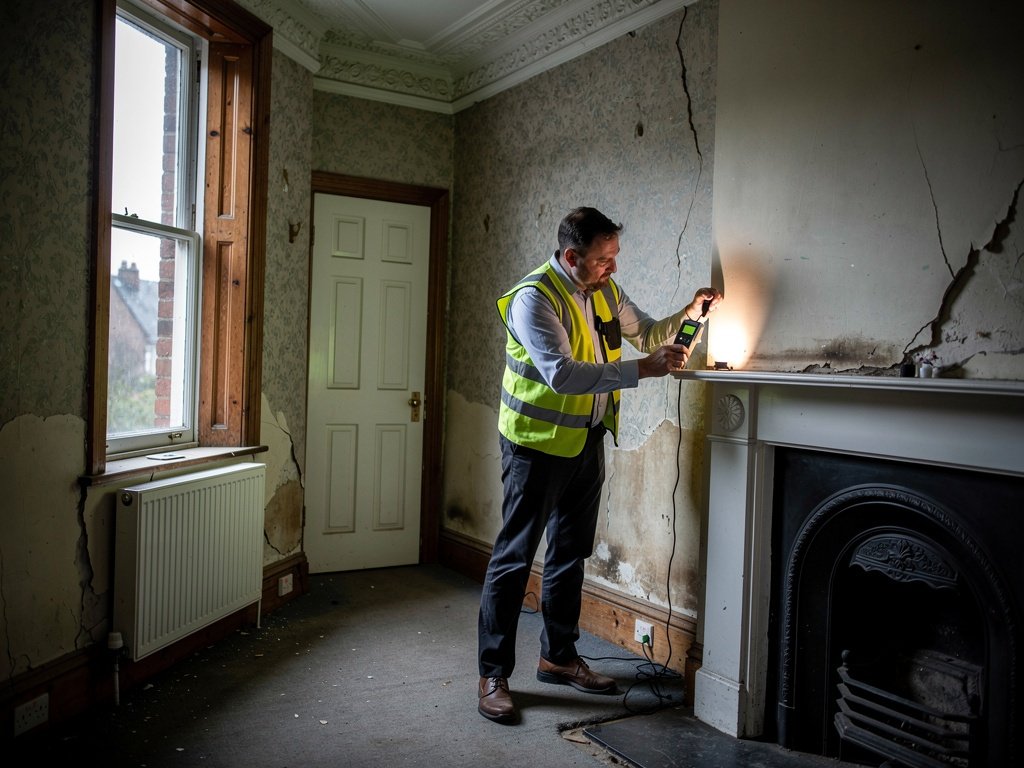
Blackpool Surveyors regularly encounters questions about subsidence — and it's no wonder. Subsidence is one of the most feared structural issues in residential property. In Blackpool and across the Fylde Coast, the ground conditions and property stock create some specific risks that buyers need to understand. Here's everything you need to know.
What Is Subsidence?
Subsidence occurs when the ground beneath a property's foundations sinks or shifts, causing the building above to move. Unlike settlement — which is the gradual, predictable compression of soil under a new building's weight — subsidence is caused by ground instability that was not present when the building was constructed. The key distinction matters: some historic movement in a Victorian property is entirely normal; active, ongoing subsidence is a different and more serious matter.
Subsidence causes cracking in walls, sticking doors and windows, and distortion of internal finishes. In serious cases, it can threaten the structural integrity of the building and make it very difficult to insure.
Subsidence Risk in Blackpool and the Fylde Coast
Blackpool and the Fylde Coast present a particular set of ground conditions that affect subsidence risk:
Sand and Made Ground
Much of the Fylde Coast is underlain by sand and alluvial deposits — particularly close to the coastline and in lower-lying areas. Sandy soils are generally free-draining and relatively stable, but they can be susceptible to erosion and compaction under certain conditions, particularly if groundwater levels change significantly.
Areas of "made ground" — former industrial sites, filled-in ponds or streams, or areas where the original topography has been modified — are present in parts of Blackpool and carry higher subsidence risk. Local geological surveys and drainage records can provide important context when buying in affected areas.
Clay Soils in Inland Areas
Further inland — towards Poulton-le-Fylde, Kirkham, and the Wyre Valley — clay soils are more prevalent. Clay is the classic subsidence risk material: it shrinks in dry conditions (particularly during droughts) and expands when wet. Properties on clay soils near large trees are at particularly elevated risk, because tree roots extract moisture from the soil, causing localised shrinkage around the root zone.
Shallow Victorian Foundations
The Victorian terraces that form the majority of Blackpool's housing stock were typically built on shallow strip foundations — often as little as 300–450mm deep, compared to the 900mm+ that would be specified today. These shallow foundations are more susceptible to movement as ground conditions change over time.
Warning Signs of Subsidence to Look for When Viewing
When viewing a property in Blackpool, look for these potential indicators of subsidence:
- Diagonal cracks running at 45° from the corners of window or door openings — often a classic subsidence indicator, particularly if wider at one end than the other (tapered)
- Stair-step cracking in brickwork, following the mortar joints in a stepped diagonal pattern
- Doors and windows that stick or have gaps at one corner of the frame
- Cracks that recur after being filled — fresh filler over old cracks, or cracks visible at the edges of old filler, suggests ongoing movement rather than historic, stable cracking
- Sloping floors that are more pronounced than might be expected in a period property
- Cracking at extensions or bay windows — the junction between a later addition and the original structure is a common location for differential movement
Important: Not All Cracks Indicate Subsidence
Many cracks in Victorian properties are entirely benign — the result of normal thermal expansion and contraction, or minor historic settlement that occurred decades ago and has long since stabilised. The key is to distinguish between historic, stable cracking (which may simply need cosmetic repair) and active, ongoing movement (which requires investigation). A RICS surveyor can make this assessment.
What Happens During a Subsidence Investigation?
If a Level 3 Building Survey reveals cracking or movement that warrants further investigation, the typical process is:
- Monitoring: Crack monitoring studs are installed to measure whether movement is ongoing. A monitoring period of 12 months is typically required before definitive conclusions can be drawn.
- Structural engineer's report: A specialist structural engineer will assess the movement and recommend remediation if required.
- Ground investigation: Boreholes or trial pits may be sunk to identify ground conditions and the depth and condition of foundations.
- Remediation: If active subsidence is confirmed, underpinning (strengthening or deepening the foundations) may be required. Modern underpinning techniques include traditional mass concrete underpinning and resin injection methods.
Subsidence and Property Insurance
A property with a history of subsidence — even if successfully remediated — will be subject to restrictions and loadings on buildings insurance. It's essential to obtain specialist subsidence insurance quotes before completing on a purchase. Many mainstream insurers will decline or significantly restrict cover for properties with subsidence history.
When reviewing the seller's property information form (TA6), look for any disclosure of subsidence history, insurance claims, or structural guarantees (NHBC, structural warranty). Your solicitor should review these carefully.
How a RICS Survey Protects You
A thorough RICS building survey from Blackpool Surveyors will assess all visible evidence of movement, categorise any cracking using the BRE crack classification system, and provide clear recommendations on whether further investigation is required. Our surveyors have detailed local knowledge of Blackpool's ground conditions, housing stock, and typical structural issues.
If our survey identifies subsidence risk, we will explain clearly what it means, what additional investigations may be needed, and — crucially — what it might mean for your purchase. In many cases, a well-remediated and properly insured property with a historic subsidence claim is a perfectly sound purchase. Our job is to give you the information to make that decision confidently.
Frequently Asked Questions About Subsidence
How much does it cost to fix subsidence?
Minor underpinning on a section of a terraced property might cost £5,000–£15,000. Significant subsidence requiring full underpinning of a Victorian terrace can cost £20,000–£50,000+. In serious cases, remediation costs can exceed the property value — which is why a thorough survey before purchase is so important.
Can I get a mortgage on a property with subsidence?
Some lenders will lend on properties with historic (remediated) subsidence, with conditions. Active, ongoing subsidence will typically result in mortgage refusal until the issue is resolved. Your mortgage lender's surveyor will assess this separately from your own survey.
Is Blackpool high risk for subsidence?
The risk varies by location within Blackpool. Coastal areas on sandy soils carry a different risk profile to inland areas on clay. The Victorian age of much of Blackpool's housing stock and the shallow foundations used in that era create some elevated risk relative to modern construction. A local RICS surveyor can advise on specific properties.
What should I do if I spot cracks when viewing a property?
Note the crack locations, widths (roughly) and patterns (horizontal, vertical, diagonal, stair-step). Take photographs if possible. Then commission a Level 3 Building Survey — a Level 2 survey may not provide sufficient detail on structural movement. At Blackpool Surveyors we will assess all visible cracking and advise whether further investigation is required.
Do I need to tell buyers about subsidence when selling?
Yes. Sellers in England and Wales are legally required to disclose known material facts about a property, including subsidence history. Non-disclosure can result in legal action after completion. Any historic insurance claims for subsidence should be declared on the TA6 property information form.
Concerned About Structural Movement?
Book a Level 3 Building Survey with Blackpool Surveyors for a thorough structural assessment. Our local RICS surveyors know Blackpool's housing stock and ground conditions inside out.
Book a Survey