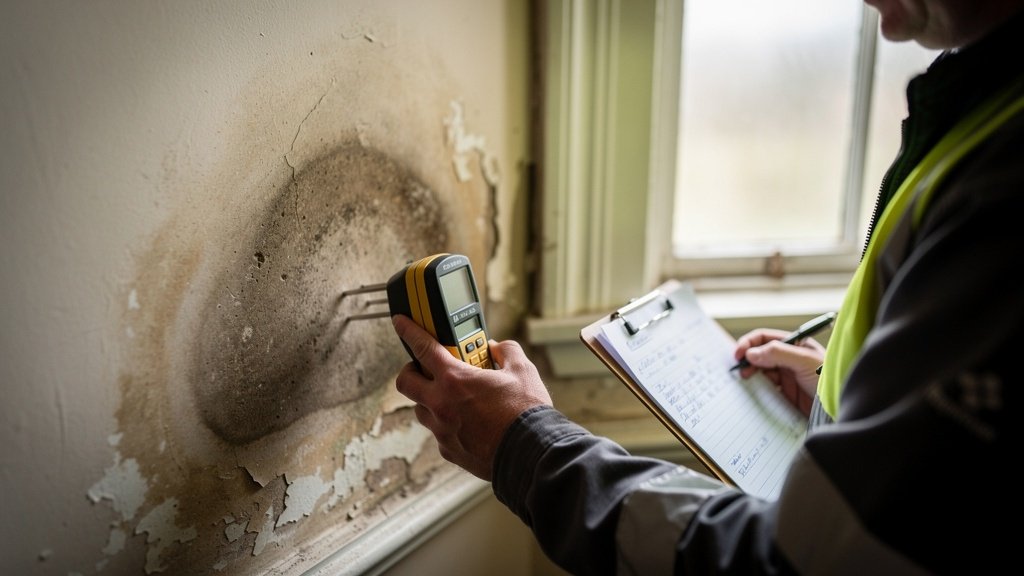
If there's one issue that comes up more than any other in Blackpool property surveys, it's damp. Given that we have a coastal climate, a predominantly Victorian and Edwardian housing stock, and a significant proportion of properties that haven't been maintained as well as they could have been, damp is simply a fact of life in this part of Lancashire. But — and this is important — damp is not always the disaster it first appears to be. The key is understanding what type you're dealing with.
In this guide, I'll walk you through the three main types of damp you'll encounter in Blackpool properties, explain what causes each one, and give you a realistic sense of what the repair costs might look like. This is practical information that I wish every buyer in Blackpool had before they started viewing properties.
Type 1: Rising Damp
Rising damp is caused by groundwater being drawn upwards through masonry by capillary action — think of it like a sponge absorbing water. In theory, all walls have a damp-proof course (DPC) that prevents this happening. In older Victorian and Edwardian properties in Blackpool, the DPC was typically a layer of slate or engineering bricks, which can degrade or fail over time.
The signs of rising damp include: a tide-mark on internal walls, typically at a height of around 1 metre from the floor; salt deposits (efflorescence) on plasterwork; deteriorating skirting boards; and in severe cases, wet patches at low level that are more pronounced in wet weather.
True rising damp is actually less common than many people think — it's often confused with other moisture problems. This matters a great deal because the treatments are different. A reputable surveyor should be able to distinguish between genuine rising damp and other moisture ingress. Be wary of damp-proofing companies who diagnose rising damp in every property they visit — this is a known industry problem.
Typical repair cost: A proper rising damp treatment — chemical DPC injection, re-plastering, and new skirting — typically costs £1,500–£3,500 for a standard Victorian terrace. Get three quotes from reputable contractors, and make sure any guarantee is backed by a warranty company.
Type 2: Penetrating Damp
Penetrating damp is caused by water entering the building through the external envelope — through walls, roofs, windows, or other openings. It's extremely common in Blackpool's Victorian properties, which typically have solid single-skin external walls rather than the cavity walls found in post-war properties. Without a cavity to provide a drainage layer, any water that penetrates the outer leaf of a solid wall will eventually reach the inner surface.
Signs of penetrating damp include: wet patches on internal walls that correspond to external features (windows, bays, copings); damp that gets worse in wet weather; damp staining on ceilings below flat roofs or valley gutters; and deteriorating plasterwork on upper-floor walls where rain exposure is greatest.
The good news is that penetrating damp usually has a specific, identifiable cause. Fix the source of the water ingress — repair the failed pointing, replace the damaged flashing, clear the blocked guttering — and the problem stops. The bad news is that on some properties, the source can be genuinely complex to find and expensive to fix.
Typical repair cost: This varies enormously depending on the cause and extent. Repointing a chimney stack might cost £500–£1,500. Replacing failed render on an elevation could be £3,000–£8,000+. Always establish the cause before spending money on internal decoration.
Type 3: Condensation
Condensation is probably the most common moisture problem in UK housing — and it's often misdiagnosed as damp. Condensation occurs when warm, moist air meets a cold surface and deposits water. It's worst in poorly ventilated properties — particularly those with inadequate heating and poor air circulation.
Signs of condensation include: mould growth in corners and on cold surfaces (particularly north-facing walls and behind furniture); water droplets on windows; musty smells. Crucially, condensation is almost always at its worst in bathrooms, kitchens, and poorly heated rooms — and it typically affects the coldest surfaces first.
Condensation is often a manageable problem that can be addressed through improved ventilation, heating upgrades, and sometimes additional insulation. It is not, by itself, a reason to walk away from a purchase. But it should prompt investigation to ensure the underlying cause is correctly identified.
A Note on "Damp Surveys"
Be cautious about using a specialist damp company to assess damp problems — their business model incentivises them to find problems that require their services. Always get an independent assessment from a RICS surveyor first, and use specialist contractors only for specific remediation work recommended by your surveyor.
What Our Surveys Do About Damp
In every survey we carry out in Blackpool, we carry a calibrated electronic moisture meter. We check all accessible walls, floors, and ceilings. Any areas of elevated moisture are noted in the report, with our assessment of the likely cause and recommended action. For our Level 3 building surveys, we provide detailed information about each damp issue found, including our assessment of severity and estimated remediation costs.
Concerned About Damp in a Blackpool Property?
Get a thorough, independent assessment from our RICS surveyors. We'll give you an honest picture.
Book a SurveyFAQ: Damp in Blackpool Properties
Not necessarily. Damp is extremely common in older Blackpool properties. The key questions are: What type of damp is it? What's causing it? How severe is it? And how much will it cost to fix? Your surveyor should help you answer all of these. In many cases, damp is entirely fixable — and finding it gives you a legitimate basis to negotiate on price.
Generally, no. Standard buildings insurance policies exclude gradual deterioration, including damp. This is why it's so important to identify damp issues before you buy, rather than assuming insurance will cover the cost of remediation.
It depends on the type and severity. Condensation can often be improved quickly through ventilation and heating changes. Penetrating damp requires identifying and fixing the source — this can range from a day's work to several weeks. Rising damp treatment involves drilling, chemical injection, and re-plastering — typically 1–2 weeks for a standard property.