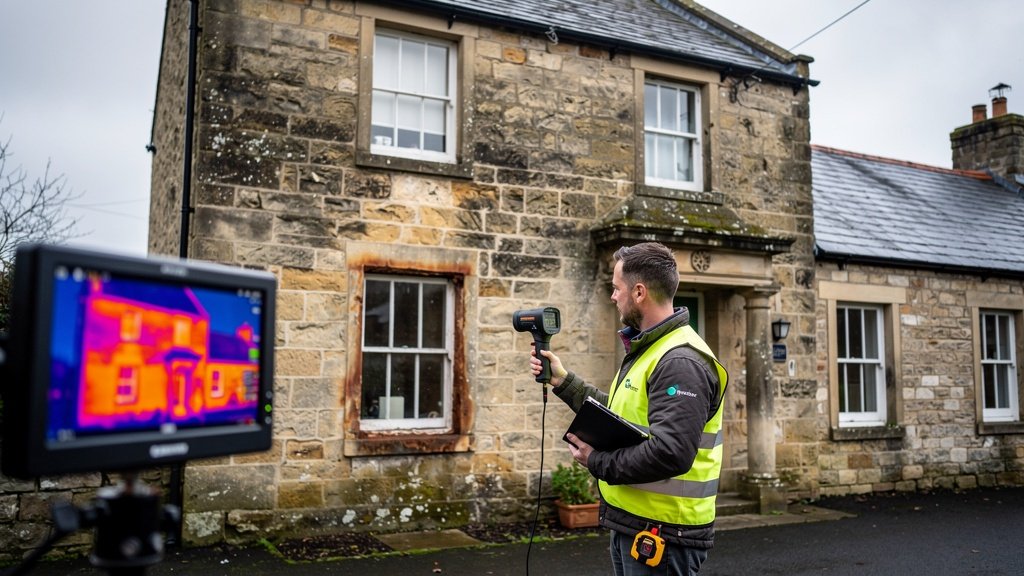
Energy efficiency has become one of the most important factors for property buyers across Blackpool and the Fylde Coast. With energy costs remaining elevated and government requirements for EPC ratings tightening, understanding the energy performance of a property you're buying is more important than ever. Blackpool Surveyors explains what our surveys reveal about energy efficiency in the area's Victorian housing stock — and what you can realistically do about it.
The Energy Efficiency Challenge in Blackpool's Victorian Homes
Blackpool's housing stock is dominated by Victorian and Edwardian terraces built before modern insulation standards existed. These properties have several inherent characteristics that affect their energy performance:
- Solid brick walls (typically 225mm thick) with no cavity for insulation — these walls account for the largest proportion of heat loss in period Blackpool properties
- Single-glazed sash windows (where original windows survive) or mismatched double-glazing installed at various dates
- Limited or no roof insulation in properties with older insulation installations, or poorly laid insulation that has settled or become damp over time
- Uninsulated suspended timber floors — the original timber floorboards over an uninsulated subfloor void are highly draughty
- High air infiltration — Victorian terraces are inherently leaky buildings, with gaps around skirting boards, floor voids, chimney stacks, and original poorly-fitted joinery
The result is that most Victorian terraces in Blackpool carry an EPC (Energy Performance Certificate) rating of D, E, or even F — significantly below the D minimum threshold that the government has proposed as a requirement for privately rented properties.
What Our Thermal Imaging Surveys Reveal
At Blackpool Surveyors, we use thermal imaging cameras as a supplementary tool during Level 3 Building Surveys to visualise heat loss patterns in solid-wall properties. Thermal imaging reveals:
Cold Bridging at Wall Junctions
Thermal bridging — where a continuous conductive path through the structure allows heat to flow more rapidly — is clearly visible with a thermal camera. Common locations include wall/floor junctions, wall/ceiling junctions, and around window reveals. These areas show as distinctive blue/purple cool zones on the thermal image and contribute to heat loss and condensation risk.
Failed or Missing Insulation
Where loft insulation has been installed but is poorly laid, compressed, or damaged by water ingress, the thermal camera reveals the difference clearly. Similarly, areas where cavity fill insulation (in later properties with cavity walls) has settled or become damp show as anomalies.
Air Infiltration Paths
Cold air infiltrating through gaps in the building fabric shows as distinctive cold trails on thermal imagery, particularly in winter. Gaps around skirting boards, floor hatches, pipe penetrations, and around window and door frames are frequently identified.
EPC Ratings in Blackpool: What to Expect
Based on our survey experience across Blackpool and the Fylde Coast, typical EPC ratings for different property types are:
Typical EPC Ratings for Blackpool Properties
- Unimproved Victorian solid-wall terrace: E or F (band score 35–54)
- Victorian terrace with basic improvements (loft insulation, modern boiler): D (55–68)
- Victorian terrace with significant retrofit (wall insulation, double glazing, efficient heating): C (69–80)
- Post-1990s cavity wall property with standard insulation: C–D (60–75)
- Modern new build (post-2010): B or A (80+)
Cost-Effective Energy Improvements for Blackpool Victorian Homes
Improving the energy efficiency of a solid-wall Victorian terrace in Blackpool is entirely achievable, though it requires a realistic budget and approach. Here are the improvements in approximate order of cost-effectiveness:
1. Loft Insulation (£300–£600)
If the loft is accessible and currently uninsulated or under-insulated, increasing insulation to the current recommended depth of 270mm is the single most cost-effective energy improvement available. On a typical Blackpool terrace, the savings can be £150–£250 per year depending on previous insulation levels.
2. Modern Efficient Boiler (£1,800–£3,000)
Replacing a 15–20 year old boiler with a modern A-rated condensing boiler can reduce heating bills by 15–25%. On a Blackpool terrace with a large older boiler, this can represent substantial ongoing savings.
3. Double or Secondary Glazing (£2,000–£6,000 for full property)
In properties with original single-glazed windows — or mismatched older double glazing — modern A-rated double glazing represents a significant improvement. For properties in conservation areas or where original sash windows are valuable, secondary glazing provides a less intrusive alternative that still substantially reduces heat loss.
4. Draught Proofing (£200–£500 DIY to professional)
Systematically draught-proofing a Victorian terrace — sealing around skirting boards, letterboxes, keyholes, chimney flues (when not in use), and floor hatches — can reduce infiltration heat loss significantly for a modest cost.
5. Internal or External Wall Insulation (£5,000–£20,000)
For solid-walled Victorian properties, wall insulation is the most challenging and expensive retrofit measure. External wall insulation (EWI) is typically more effective but changes the appearance of the property and requires planning permission in conservation areas. Internal wall insulation (IWI) avoids planning issues but reduces floor area and creates complications with window reveals and skirting boards. Both can significantly improve the EPC rating and comfort.
Energy Efficiency and Mortgage Availability
EPC ratings are increasingly affecting mortgage availability. Several lenders now offer "green mortgage" products with lower rates for properties with EPC ratings of C or above. Properties rated F or G — which still exist in older parts of Blackpool — may face restrictions on mortgage availability from some lenders, and landlords are required to ensure rented properties meet minimum energy standards.
If you're buying a property with a low EPC rating, factor the cost of improvements into your offer calculation. Our Level 3 Building Survey can identify the current state of insulation and energy systems, and we can provide indicative improvement costs to help your planning.
Frequently Asked Questions About Energy Efficiency
Will a building survey tell me the EPC rating?
A building survey does not produce an EPC — that requires a separate assessment by a qualified Domestic Energy Assessor (DEA). However, a Level 3 building survey will assess the insulation, heating system, and fabric of the property and can indicate the likely energy performance category. An EPC should already be available on the EPC Register for any property that has been sold or rented in the last 10 years.
Should I improve energy efficiency before or after buying?
Typically after — though if significant works are needed (wall insulation, new heating system), this knowledge before exchange lets you negotiate the purchase price accordingly. Our surveys provide estimated costs for energy improvement works to support this.
Are there grants available for energy improvements in Blackpool?
Yes. The UK Government's Great British Insulation Scheme and ECO4 scheme provide subsidised or free insulation improvements for eligible households. Lancashire County Council also runs energy efficiency support programmes. Eligibility depends on property EPC rating, household income, and other factors.
What is solid wall insulation and is it worth it?
Solid wall insulation (either internal or external) adds an insulating layer to the walls of properties that don't have a cavity. It's expensive (£6,000–£20,000 depending on property size and method), but it can significantly improve comfort and reduce heating bills. For some properties, government grants may be available. It's worth getting specialist retrofit advice before committing.
Does a good EPC rating add value to a Blackpool property?
Evidence is growing that higher EPC ratings support higher transaction prices, particularly for buy-to-let properties where the minimum EPC requirement for lettings applies. In the residential market, the value differential between D and E-rated properties in Blackpool is currently modest but is expected to grow as government requirements tighten.
Find Out Your Property's Energy Performance
A Level 3 Building Survey from Blackpool Surveyors includes an assessment of insulation, heating systems, and energy performance indicators. Know what you're buying and what improvements to budget for.
Book a Survey