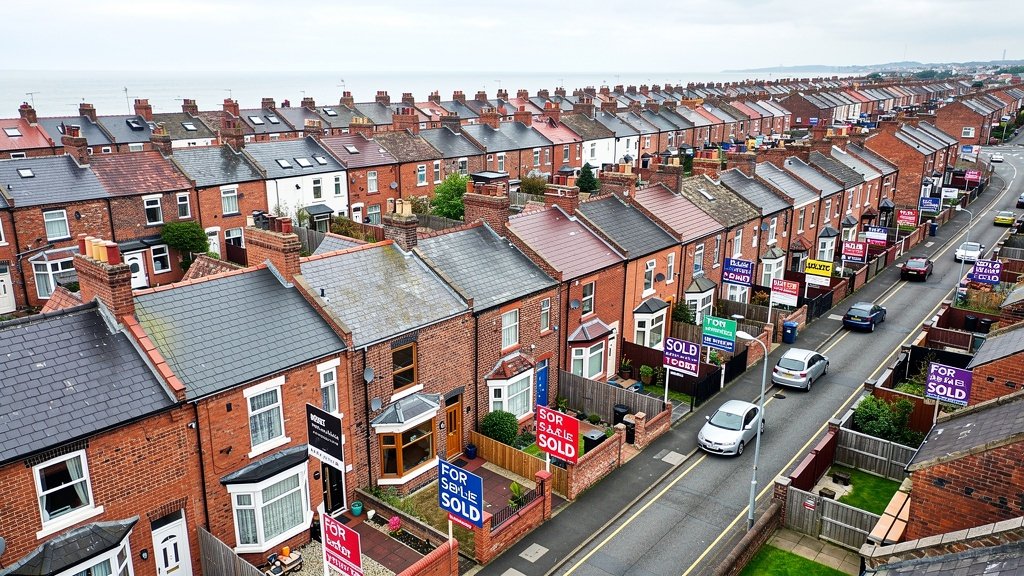
I've been surveying properties in Blackpool for the best part of two decades, and I've watched the market go through some remarkable changes. From the post-financial-crisis doldrums to the pandemic-era buying frenzy, Blackpool has always had its own distinct character as a property market. Here's my honest assessment of where things stand in 2025 — and what buyers need to know before entering the market.
Why Blackpool Is an Unusual Property Market
Blackpool is genuinely different from most UK property markets. It's one of the most deprived towns in England by some measures, yet it's also one of the most geographically desirable coastal locations in the north west. This tension creates a property market with very wide price variation — from some of the cheapest terraced housing in Lancashire to genuinely beautiful and well-priced seafront properties that would cost multiples in a comparable southern location.
The Blackpool property market was significantly boosted by the pandemic years, as urban buyers sought coastal and north west locations. Average prices rose sharply between 2020 and 2022. Since then, like most of the UK, the market has cooled — but Blackpool's relative affordability compared to national averages has kept demand reasonably healthy.
Average Property Prices in Blackpool (2024–2025)
Based on Land Registry data and our own valuation work, here are approximate average property values by type in Blackpool as of late 2024:
- Victorian/Edwardian terraced house: £90,000–£145,000
- Semi-detached house: £140,000–£200,000
- Detached house: £220,000–£350,000+
- Flat or apartment: £70,000–£130,000
- Bungalow: £160,000–£240,000
These are broad averages — prices vary significantly by area. A terraced house in a run-down part of the town centre might sell for under £80,000; an equivalent property in a well-maintained area near Bispham or close to good schools might fetch £140,000 or more. Location within Blackpool matters enormously.
The Best Areas to Buy in Blackpool
From a surveyor's perspective — which is inherently a property-condition perspective, rather than purely a price perspective — here are the areas I see the most desirable stock in:
North Shore and Bispham: Some of the best Victorian stock in Blackpool, with well-maintained bay-fronted terraces. Better maintained than much of the town centre. Good proximity to the seafront without being in the highest-risk flood zone.
South Shore: A mix of inter-war semis and Victorian terraces. Generally well-maintained. Good transport links. Popular with families. Properties closer to the Pleasure Beach can be noisy but are often well-priced.
Layton and Marton: More suburban feel, with post-war semis and some detached properties. Less character than the Victorian terraces, but often in better structural condition and requiring fewer immediate repairs. Popular with buyers seeking a quieter residential feel.
Cleveleys and Poulton-le-Fylde: Technically outside Blackpool, but close by. Command premium prices but generally offer better maintained stock and a more affluent feel. Well worth considering if your budget allows.
What Buyers Should Watch Out For in the Blackpool Market
After years of surveying in Blackpool, there are a few market-specific cautions I give to every buyer:
Be wary of "freshly renovated" properties. Cosmetic renovation can conceal structural problems. Fresh paint, new carpets, and a modern kitchen can make a tired Victorian terrace look like a sound investment — but they don't fix damp, roof problems, or structural movement. A survey is essential regardless of how new the decorating looks.
Check the planning history. Many Blackpool properties have been converted — from houses to flats, or extended without planning approval. Your solicitor should check the planning history, but your surveyor can flag any visible evidence of alterations that may not have had proper approval.
Factor in ongoing maintenance costs. A Victorian terrace in Blackpool may be a bargain at £100,000, but it will need ongoing investment to keep it in good condition. Factor in roof maintenance, repointing, and potential damp remediation over a 10-year horizon.
The Investor Angle
Blackpool attracts significant buy-to-let investment due to its low prices and reasonable rental yields. The town's regeneration programme is ongoing and there's genuine optimism about its long-term trajectory. As a surveyor, I'd always advise any investor to get a thorough survey before purchasing — rental income doesn't cover structural surprises.
The Regeneration Factor
Blackpool has been the subject of sustained regeneration investment for several years. The tramway improvements, the sea defences, the leisure quarter development, and the ongoing town centre transformation have all contributed to a more positive outlook for the town. Many buyers are attracted by the combination of low prices today and the potential for capital appreciation as regeneration continues.
From a surveying perspective, regeneration is genuinely positive — it tends to lead to improved maintenance of the wider housing stock and increased demand. But it doesn't change the fundamentals of individual properties. A poorly maintained Victorian terrace in a regeneration zone is still a poorly maintained Victorian terrace.
Buying in the Blackpool Property Market?
Get an independent, expert survey from our local RICS surveyors. We know the Blackpool market better than anyone.
Book a Survey