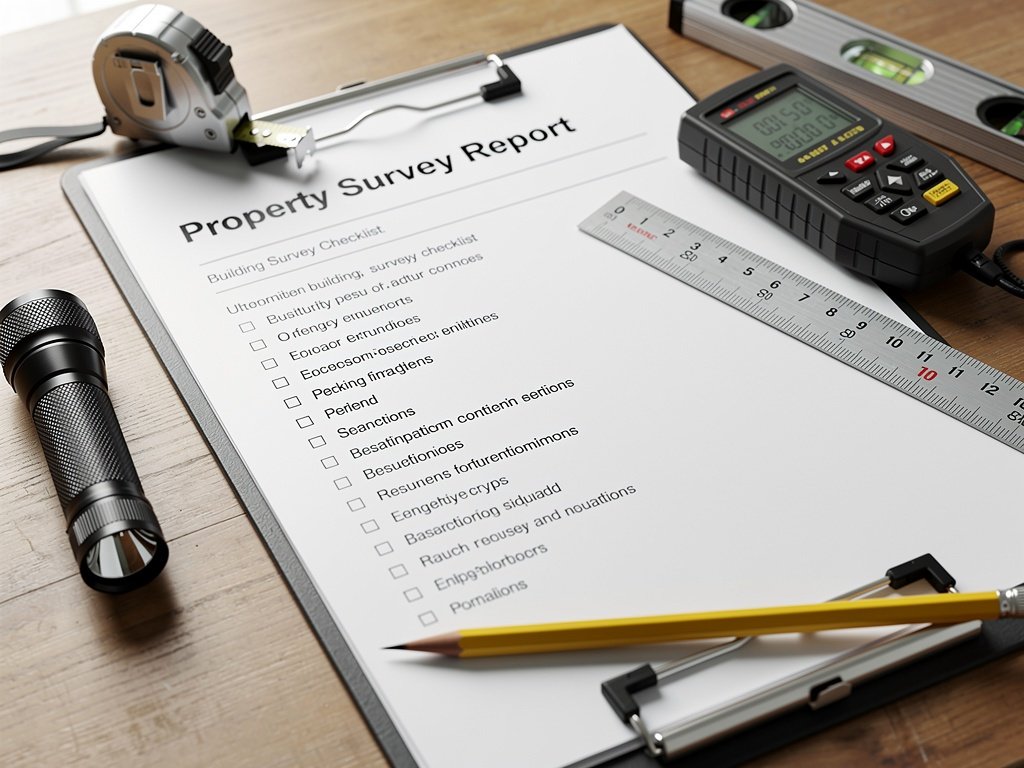
Your RICS survey report has arrived. It's probably 30–70 pages long, depending on the type of survey you commissioned. There are sections you don't understand, terminology you've never come across, and a traffic-light rating system that — at first glance — makes your prospective new home look like a construction disaster zone. Don't panic. Let me walk you through it.
Understanding the Condition Rating System
RICS surveys use a standardised condition rating system with three ratings. Every element of the property is given one of these ratings, and understanding them is the key to reading your report:
🟢 Condition 1 — No cause for concern
No repair is currently needed. The property element is in a reasonable condition. These sections can essentially be set aside — they're not the things you need to worry about.
🟡 Condition 2 — Defects that need repairing or replacing
There are defects that need attention, but they are not considered serious or urgent. These are things to attend to in the normal course of maintenance and ownership — but not necessarily before you exchange contracts. You should get quotes and budget accordingly.
🔴 Condition 3 — Defects that are serious and/or need to be investigated urgently
These are the findings that require immediate attention before or shortly after purchase. Condition 3 ratings often form the basis for price negotiations. You should get specialist quotes for all Condition 3 items before deciding whether to proceed.
The Structure of a RICS Survey Report
A standard RICS Level 2 or Level 3 survey report is organised into sections covering different elements of the property. Here's what each section typically covers:
Section A — About the inspection: When the inspection took place, the weather conditions, what was and wasn't accessible, and any limitations of the survey. This section is important — it tells you what the surveyor was and wasn't able to check.
Section B — Overall assessment and key risks: A summary of the most important findings. If your surveyor has flagged a condition 3 issue, it will typically be mentioned here as well as in its specific section. This is a good place to start reading.
Section C — Condition ratings (exterior): Covers the roof, chimney stacks, external walls, windows, guttering and drainage, and grounds. Each element gets a condition rating and a description of any issues found.
Section D — Condition ratings (interior): Covers roof structure, ceilings, walls, floors, fireplaces, internal joinery, and bathroom fittings. Again, each element gets a condition rating.
Section E — Services: Covers gas, electricity, water, heating, and drainage. Your surveyor can only carry out a visual inspection of services — they cannot test gas or electrical systems, and you should arrange for separate specialist tests of these before exchange.
Section F — Grounds and outbuildings: Covers garages, outbuildings, boundaries, and grounds.
Section G — Issues for legal advisors: Items your solicitor needs to look into, such as planning permission for extensions, building regulations completion certificates, or boundary disputes.
Section H — Valuation: If you requested a valuation as part of your survey, it appears here.
How Many Condition 2s Are Normal?
This is one of the most common questions I hear from clients. The answer: quite a lot, for older properties. For a typical Victorian terrace in Blackpool, it would be unusual to get a survey with fewer than 5–10 Condition 2 items. This is entirely normal for a property of this age and doesn't mean the property is in poor condition.
The things to focus on are Condition 3 items, the number and cost of Condition 2 items in total, and whether any of the notes under Condition 2 items suggest they might deteriorate to Condition 3 if not addressed relatively soon.
What To Do With Your Report
Once you've read your report, your next step is usually one of the following:
- If there are no Condition 3 items: Proceed with confidence. Budget for the Condition 2 repairs over the coming months and years.
- If there are Condition 3 items with manageable repair costs: Get specialist quotes. Use these quotes to negotiate on price with the seller — a well-evidenced reduction request based on survey findings is entirely reasonable and commonly accepted.
- If there are Condition 3 items with significant or uncertain repair costs: Discuss with your surveyor. We offer a free follow-up call to all clients. In some cases, you may want to commission further specialist investigations before deciding whether to proceed.
- If the report reveals fundamental structural problems: This is rare, but it happens. In these cases, we'll talk through the options with you honestly — including the option of walking away.
"Getting my survey report and not understanding it felt overwhelming at first. But after the follow-up call with Sarah, I understood exactly what needed doing, what could wait, and what I could use to negotiate with the seller. Game-changer." — Rachel M., Poulton-le-Fylde
Questions About Your Survey Report?
All our clients get a free follow-up call to discuss their report. If you haven't had your survey yet, get a free quote from our Blackpool team today.
Talk to a Surveyor