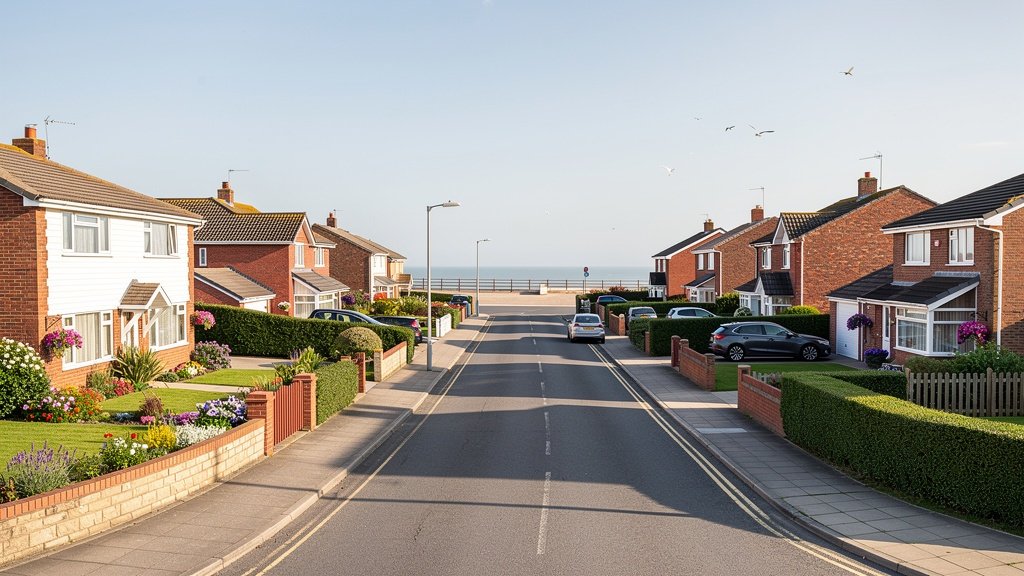
Lytham St Annes is one of the most desirable residential locations on the Fylde Coast — and one of the most complex to survey. Blackpool Surveyors covers the full Lytham St Annes area weekly, from the Victorian villas of Lytham town centre to the Edwardian seafront properties of St Annes and the newer developments further inland. Here's what buyers need to know about surveying property in FY8.
Understanding the Lytham St Annes Property Market
Lytham St Annes (postcode FY8) encompasses two distinct settlements — Lytham and St Annes-on-Sea — as well as the villages of Ansdell and Fairhaven. Each has its own character and housing stock, which affects what surveyors typically find.
Lytham Town Centre and Clifton Drive North
The core of Lytham town comprises Victorian and Edwardian houses and terraces, some substantial double-fronted villas on Clifton Drive North, and a mix of purpose-built flats in converted period buildings. These are among the most expensive properties on the Fylde Coast, and accordingly attract buyers who are — correctly — interested in thorough surveys before committing.
The typical issues we encounter in Lytham's period stock include: Victorian solid-wall construction with associated heat loss and condensation risk; original or early-replacement single-pitch slate roofs with a century of Lancashire weather exposure; timber sash windows (original or early replacement) in varying condition; and extensions added throughout the 20th century that often require closer inspection of drainage and structural connections.
St Annes Seafront and Town Centre
St Annes has a distinctive Edwardian character — many of its properties were built as planned residential development from the 1880s onwards. The better preserved properties are genuinely impressive examples of their period. The closer you get to the seafront, the more pronounced the coastal weathering effects become — salt air accelerates the deterioration of mortar, render, and metalwork.
We also encounter a higher proportion of purpose-built flat conversions in St Annes — Victorian and Edwardian houses divided into flats. These require particular attention to the leasehold structure, service charges, and the condition of shared elements including roofs, external walls, and common areas.
Ansdell and Fairhaven
The Ansdell and Fairhaven areas offer a mix of early-to-mid 20th century semi-detached and detached properties, including many well-maintained bungalows that are highly sought-after by the retirement market. These properties are generally cavity wall construction (if built post-1920) but may have issues with unfilled cavities, older heating systems, and 1960s–80s extensions.
Key Surveying Issues in Lytham St Annes
Coastal Weathering and Salt Air Damage
The Fylde Coast's coastal environment is a significant factor for properties within approximately 500–800 metres of the Irish Sea. Salt air accelerates the degradation of:
- Mortar joints in brickwork — causing a powdery, friable condition requiring repointing
- Render — causing blistering, cracking, and spalling, with associated water ingress risk
- Lead flashings — salt air causes accelerated oxidation
- External joinery — paint breakdown and timber deterioration on exposed elevations
- Ironwork — gates, railings, balustrades, and window iron reveals
When surveying seafront properties in St Annes, we always give particular attention to the west- and south-west-facing elevations, which face the prevailing wind and carry the highest salt load.
Flat Roof Extensions and Rear Additions
As with Blackpool, the back-addition rear extension is almost universal in Lytham's period terraces and many semi-detached properties. In Lytham St Annes, we frequently encounter well-maintained flat roof extensions that have been renewed in quality GRP or EPDM systems — but we also regularly find older bituminous felt roofs that are well past their effective lifespan and showing signs of deterioration.
Drainage and Flood Risk
The Fylde Coast's low-lying topography means drainage is an important consideration for some Lytham St Annes properties. The areas closest to the coast, around the beach, and near the Lytham Estuary require attention to historical flood risk. The Environment Agency's flood risk maps show some areas of the St Annes seafront and the south-eastern areas near the Ribble Estuary in flood risk zones 2 and 3.
We recommend that buyers of properties in potentially flood-affected areas commission a flood risk assessment and check the property's flood insurance history (available from the seller's solicitor). Our surveys will flag any evidence of previous flood damage internally, and we note the Environment Agency flood zone designation for all properties we survey.
Conservation Area Constraints
Large parts of Lytham and St Annes town centres are designated conservation areas. This affects what alterations can be made to properties without planning permission — and also means that some properties have been more carefully maintained (preserving original features) while others have had inappropriate alterations that may require retrospective consent.
Our surveys note conservation area designation and flag any alterations that may be inappropriate or that require investigation of planning consent.
Types of Survey for Lytham St Annes Properties
Our recommendations for survey level in Lytham St Annes:
- Victorian or Edwardian houses and villas: RICS Level 3 Building Survey — the higher value and age of these properties warrants the most comprehensive assessment
- Post-1945 semi-detached and detached properties: RICS Level 2 HomeBuyer Survey where the property is in good condition; Level 3 where significant defects are visible or the property has been substantially altered
- Purpose-built flats: Level 2 survey of the flat, plus review of leasehold documentation, service charges, and management company accounts
- New build properties: Professional snagging survey before or immediately after completion
Frequently Asked Questions About Lytham St Annes Surveys
Do you cover the full Lytham St Annes area?
Yes — Blackpool Surveyors covers all parts of Lytham St Annes (FY8), including Lytham town centre, St Annes seafront and town centre, Ansdell, Fairhaven, and surrounding villages. See our full areas covered page.
Are Lytham St Annes properties more expensive to survey?
The survey fee depends on the property size and type, not the postcode. A larger, older Victorian villa in Lytham will cost more to survey than a smaller modern semi in Ansdell — but the fee difference reflects the scope of work, not the address.
Should I be concerned about flood risk in Lytham St Annes?
Some areas near the seafront and the Ribble Estuary are in Environment Agency flood risk zones. Our surveys flag flood zone status for all properties, and we recommend specialist flood risk advice for properties in Zones 2 or 3.
How long does a Lytham St Annes building survey take?
For a standard Level 3 survey on a Lytham Victorian house, expect 3–4 hours on-site. Larger detached properties may take longer. We aim to deliver the written report within 5 working days of the inspection.
Do you provide surveys for leasehold flats in Lytham St Annes?
Yes. For leasehold flats we survey the flat itself (Level 2 or Level 3 as appropriate), note the condition of shared elements visible during the inspection, and advise on what leasehold documentation to request from the vendor's solicitor.
Buying in Lytham St Annes?
Contact Blackpool Surveyors for a free, no-obligation quote. Our locally based team covers Lytham St Annes every week and has unmatched knowledge of the area's property types and challenges.
Request a Free Quote